By Jason Duran
On paper, Neely Henry Lake set up to be a tournament full of limits. In reality, it became a tournament defined by timing, decision-making, and a handful of fish that separated everything.
This was a timing-driven tournament where short windows and isolated quality bites decided everything.
Water levels were lower than normal, and with no recent rain in the area, there was little to no current moving through the system. Those stable conditions helped the sight-fishing bite set up, allowing anglers to target individual fish in clearer sections of the lake. At the same time, it limited the effectiveness of traditional current-driven patterns that many anglers rely on at Neely Henry this time of year.
The result was a tournament that offered multiple ways to compete, but no single dominant pattern.
Some leaned into the shad spawn. Others committed to bedding fish. Still others covered water and junk-fished their way into contention. Multiple patterns produced checks, but separating from the field came down to timing, execution, and finding the right quality at the right moment.
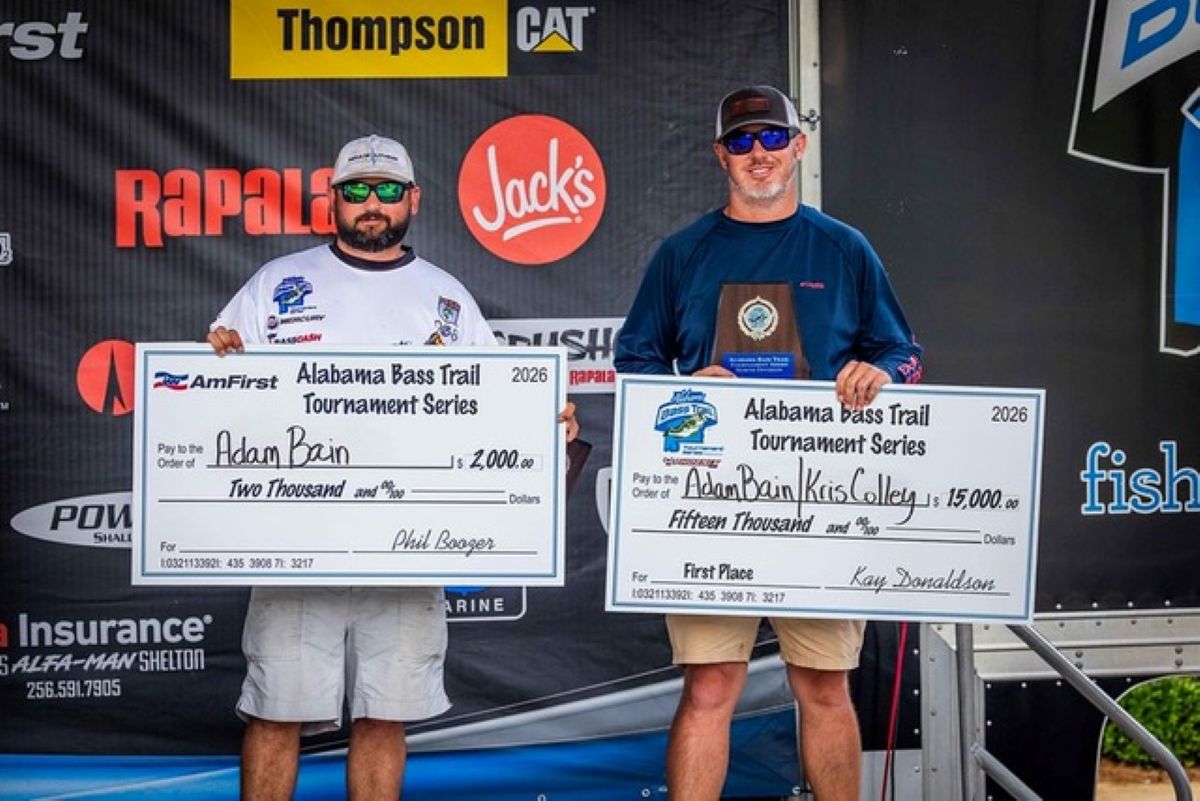
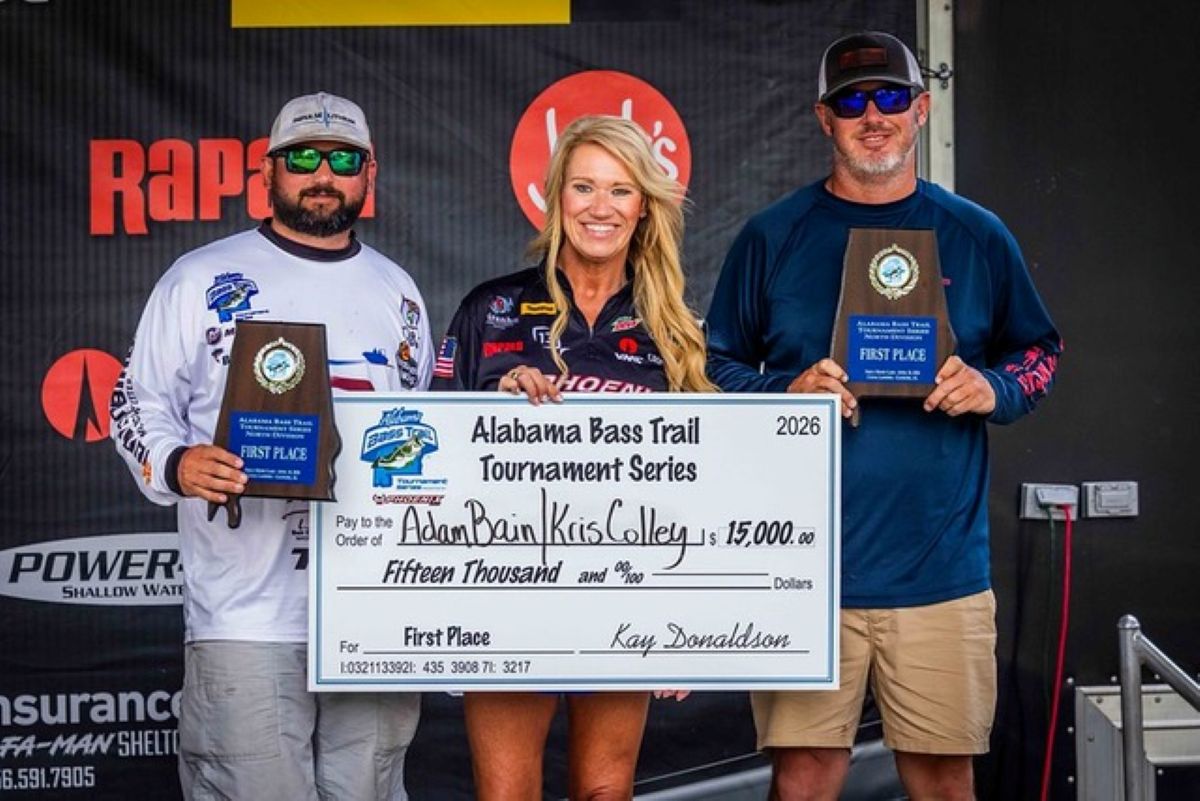
Adam Bain and Kris Colley did exactly that.
They brought five fish to the scales weighing 25.04 pounds, to win the Neely Henry event and collect $15,000, along with the $1,000 Big Fish bonus for their 6.80-pound largemouth and an additional $2,000 AmFirst bonus for financing their boat through AmFirst Credit Union. Their margin of victory stretched past four pounds, and while Neely Henry has produced strong bags over the years, a mid-25-pound limit is the kind of weight that immediately stands out and may challenge the upper end of what the Alabama Bass Trail has seen on this fishery.
From the start, Bain and Colley committed to a long run and a sight-fishing approach, a decision that carried both opportunity and risk. With limited current and changing conditions across the lake, they chose to lean into a pattern that depended on visibility, fish behavior, and patience rather than volume.
“We didn’t really know what to think going into it,” they said. “We had saw a few, but didn’t really know what to expect.”
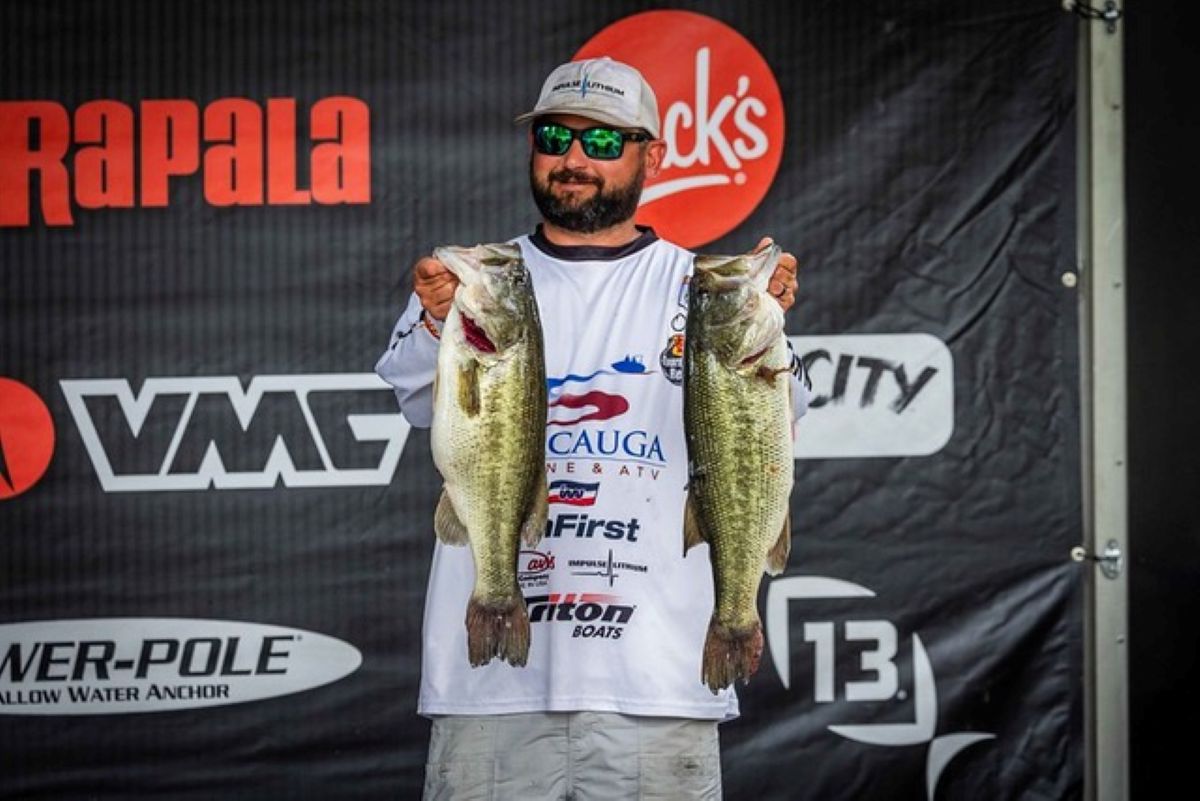
The day shifted quickly.
Early in the morning, Bain landed the 6.80-pounder that would anchor their bag. Not long after, Colley added another fish in the six-pound class. In a tournament like this, those two bites don’t just build confidence, they change how you manage the rest of the day.
“If you get two like that, it don’t take much to go with it,” they said. “At that point, we felt like as long as we didn’t mess it up, we had a good chance.”
From there, it became about execution.
They worked through fish methodically, relying on tubes and beaver-style baits in natural colors, adjusting presentations based on how each fish reacted. It was not about forcing a bait. It was about reading the fish and staying disciplined.
“It’s not really about the bait,” they said. “It’s about watching the fish and figuring out how to make them bite.”
That mindset showed up in key moments, including fish they had to work on repeatedly and even a bite that came on a seemingly random cast into the middle of a pocket. Those are the moments that define a winning day, the ones that cannot be planned but still have to be capitalized on.
Bain and Colley did not waste those opportunities, and that is why they left with one of the more impressive bags of the season and their third Alabama Bass Trail victory.
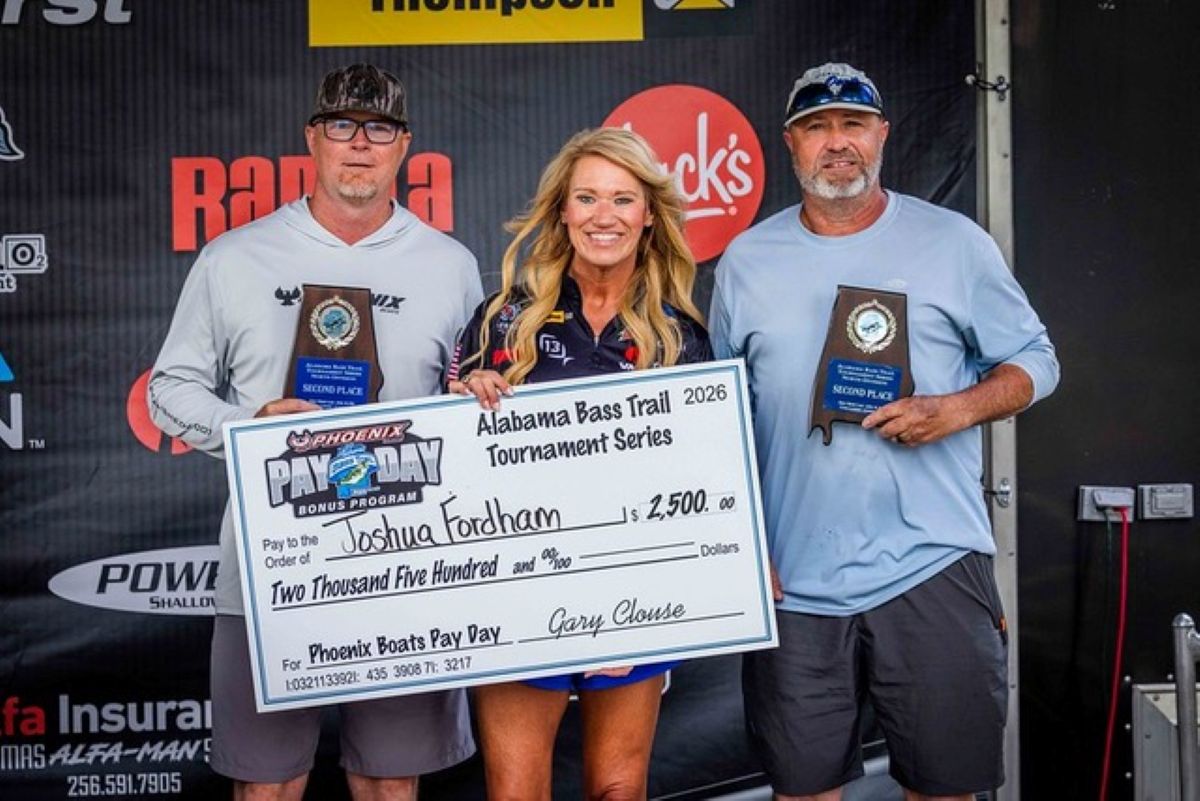
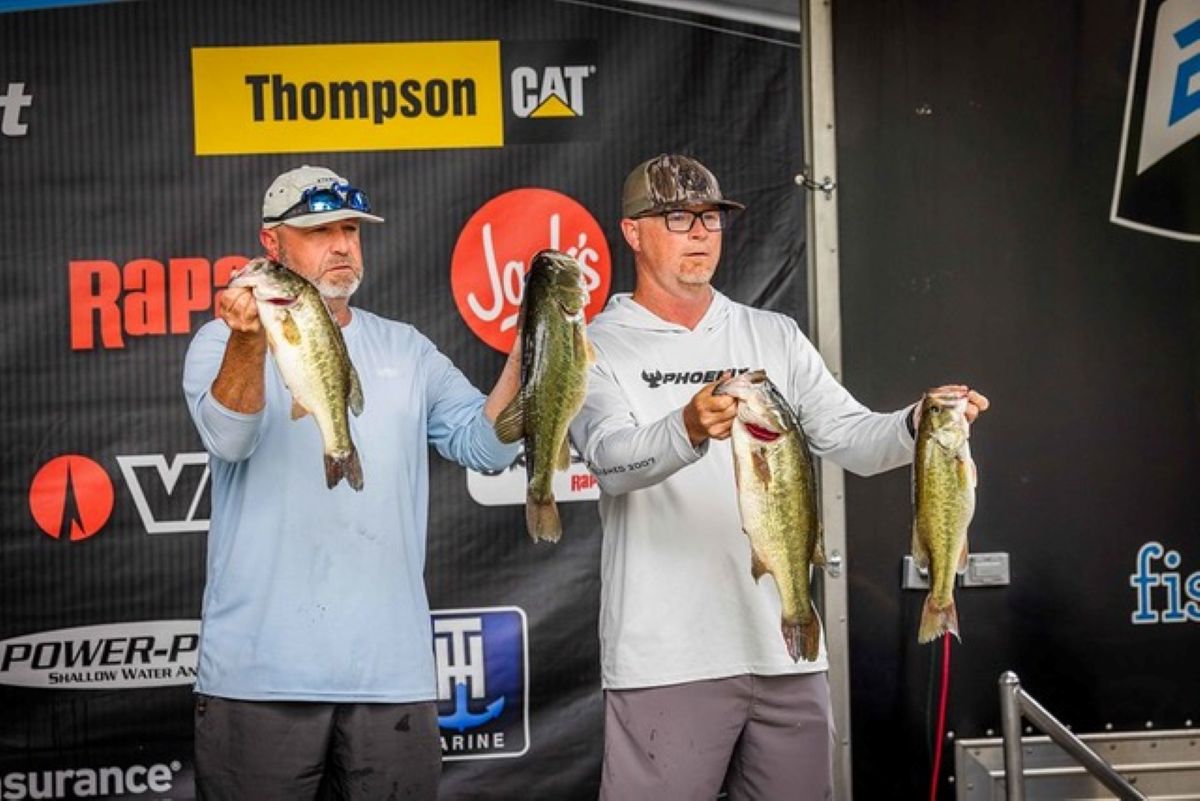
Joshua Fordham and Joey Nance took a very different path to second place, finishing with 20.53 pounds and earning $7,500, along with a $2,500 Phoenix Boats Pay Day Bonus as the highest finishing Phoenix boat owners.
Their tournament was defined by one thing: a short, high-impact window.
“Practice was horrible until yesterday morning,” they said. “We found a little shad spawn, and once we saw that, that’s what we went with.”
That window lasted less than an hour, but it was enough to anchor their entire day.
“In the first 35 minutes, we probably had 17 pounds.”
They capitalized using a white Dirty Jigs swim jig paired with a Zoom Z Hawg trailer, matching the shad and taking advantage of aggressive feeding fish early. It was a textbook example of how powerful, and how fleeting, the shad spawn can be.
Once that bite faded, the lake changed.
“The shad spawn was everything,” they said. “After that, they just spread out, and you really had to slow it down.”
They stayed in the same area and transitioned to flipping grass and docks, slowing their approach and picking off the fish they needed to complete their limit. With boat number 42, they were able to make multiple passes before pressure built, another small but important edge in a timing-based tournament.
Their runner-up finish moves them to ninth in the Angler of the Year standings and keeps them firmly in the hunt with two events remaining.
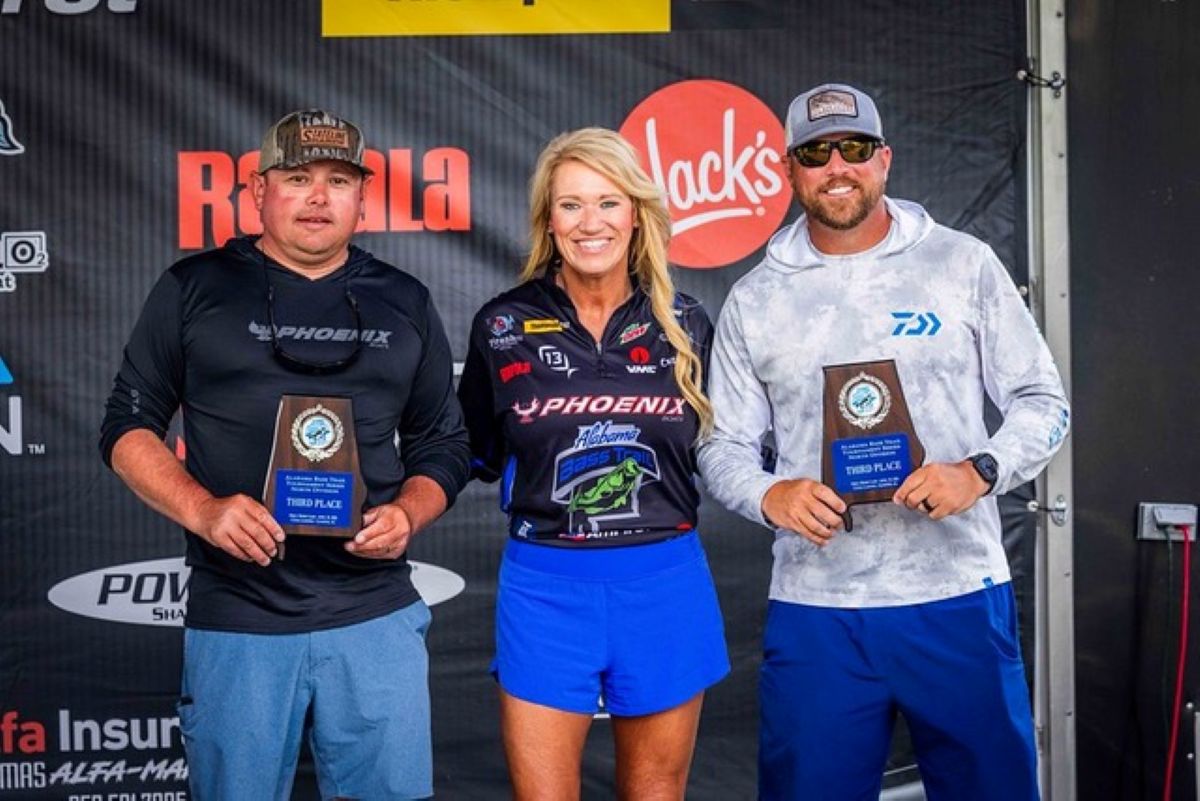
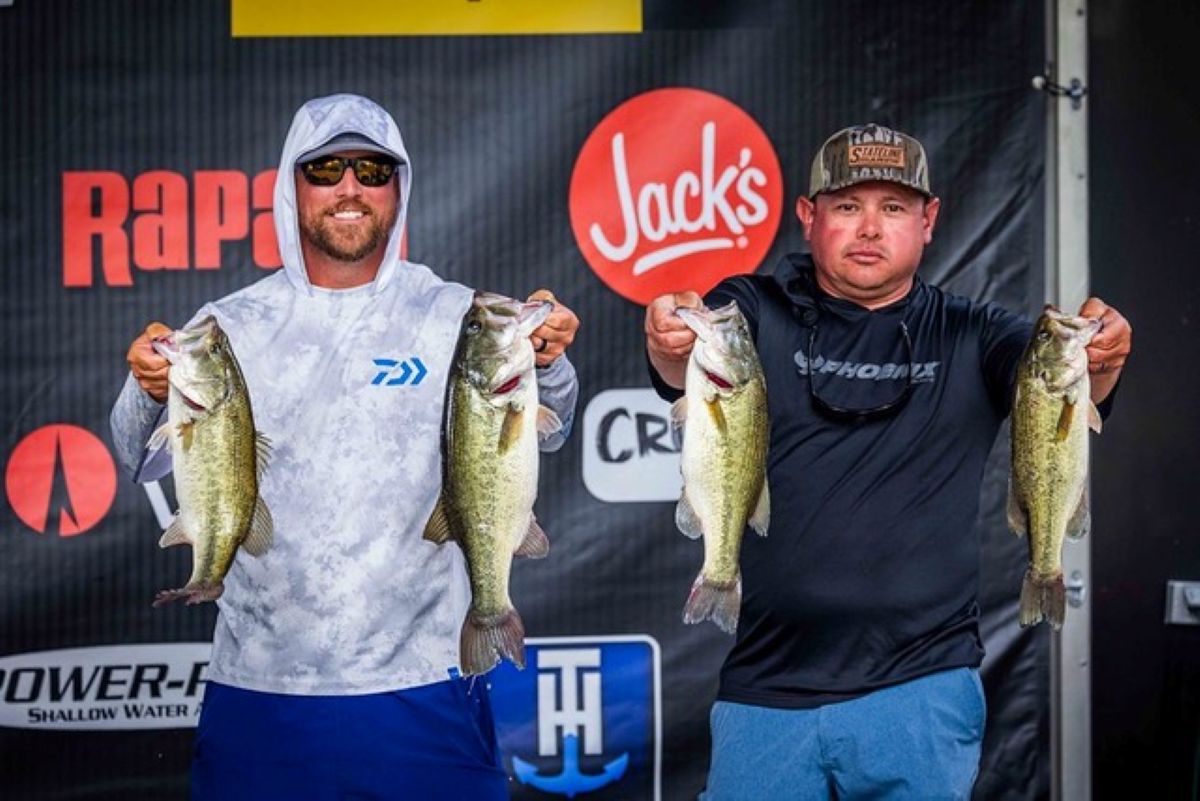
Stephen McAvoy and John Kellett finished third with 18.19 pounds, earning $6,000 by doing what the day required: adjusting.
With limited practice, they relied on local knowledge and a simple approach.
“Stay shallow and grind.”
They expected to start on a shad spawn as well, but found it gone when they arrived.
“It was happening yesterday, but this morning it was gone.”
From there, they covered water and leaned into a true junk-fishing approach, mixing flipping, swimming baits, a jig, and even a frog while fishing extremely shallow water, at times kicking up mud with the trolling motor.
They caught more than 30 fish throughout the day, reinforcing the reality of the tournament. There were fish to be caught, but building the right five required constant adjustment.
“There’s plenty of fish to catch,” they said. “It’s just finding the right ones.”
Their finish moves them to 13th in the AOY standings and keeps them within striking distance heading into the final stretch.
And that is where this tournament carries even more weight.
With only two North Division events remaining, the Angler of the Year race is no longer about building momentum. It is about protecting position and capitalizing on every opportunity.
Chris McGregor and Smith McGregor lead with 623 points, but Bill Mayo and Walt Roberts sit just three points behind at 620. Elliott Gault and James Swindle remain close at 610, with the top of the standings tightly packed and still very much in play.
In a race this tight, swings like Bain and Colley’s win matter.
Neely Henry reflected that pressure. It was a tournament where no single pattern dominated, where timing outweighed location, and where the anglers who adapted the fastest stayed in contention.
For Bain and Colley, everything aligned. They committed to their strengths, found the right fish, and capitalized when the opportunity presented itself.
That is how you win a timing-driven tournament in April.
Anglers and fans can watch all the live coverage and follow all Alabama Bass Trail events by visiting www.alabamabasstrail.org.
The Alabama Bass Trail Podcast is also available each week, featuring in-depth interviews, tournament insights, and behind-the-scenes coverage from across the Trail. Download and listen on your favorite podcast platform each Tuesday.
The 2026 Alabama Bass Trail Team Series is made possible through partnerships with industry leading brands: Phoenix Boats, AMFirst, Larry Puckett Chevrolet, 13 Fishing, Rapala, VMC, CRUSHCITY, Buffalo Rock, Academy Sports and Outdoors, Jack’s, Garmin, Thompson Tractor Company, Pirnah02, Alabama State Parks, Halo Fishing, Snag Proof, NetBait, Bait Fuel, Alfa Insurance Thomas ALFA MAN Shelton, TH Marine Supplies, Power Pole, Pro Guide Batteries, Yamaha, SCUM FROG, E3 Sports Apparel, FishAlabama.org, Sweet Home Alabama, and Alabama Mountain Lakes.


The Alabama Bass Trail is a program of the Alabama Mountain Lakes Tourist Association.

©2026 Alabama Bass Trail | All Rights Reserved | Site by McComm